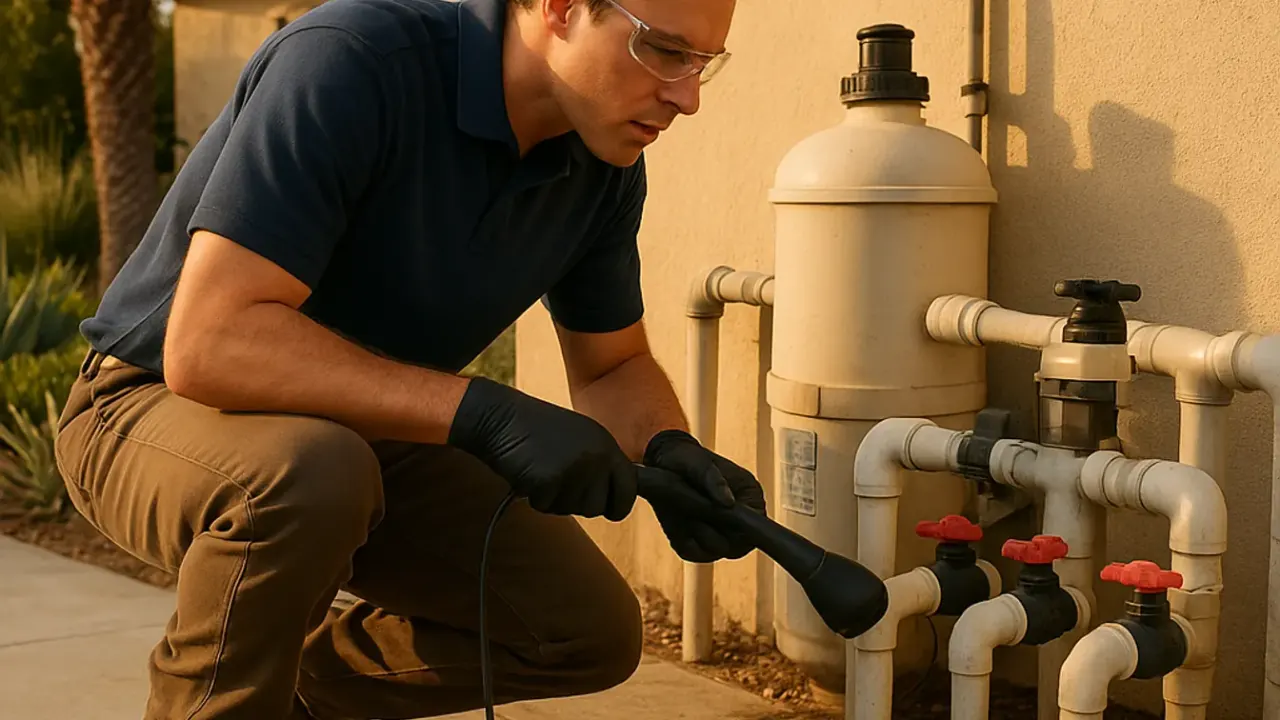
Bucket test and visual inspection
We measure evaporation versus actual loss and inspect the shell, skimmer, light niches, and equipment pad. This step tells us whether we are chasing a shell crack or an underground plumbing failure.
Every pool leak detection visit includes a full diagnostic workup. If we find the leak and you approve the repair, we credit part of the detection fee toward the fix. Here is what you get.
We measure evaporation versus actual loss and inspect the shell, skimmer, light niches, and equipment pad. This step tells us whether we are chasing a shell crack or an underground plumbing failure.
We pressurize the lines and listen with an acoustic listening disc, then confirm with an electronic leak detection wand. This combination finds most leaks without opening the deck.
When the leak is buried, we bring in a thermal imaging infrared camera to spot temperature differences in the soil. It narrows the search area to a few square feet before we cut.
We pressure-test the suspect line at 10 to 15 psi for 30 minutes. You get a written summary of what we found, where it is, and what the repair involves, with a straight price.
If you approve the repair, we cut out the failed section, install new PVC pipe or PEX tubing, and pressure-test again. The repair carries a written warranty, and we patch the deck before we leave.
Pool Leak Detection in santa ana is the process of finding where water escapes from your pool, spa, or associated plumbing. We start with a bucket test to separate evaporation from a real leak, then use an electronic leak detection wand and acoustic listening disc to hear water escaping through cracks or fittings. A pressure testing gauge confirms whether the loss is in the shell or the return lines. Most residential pools in Orange County lose a quarter inch per day to evaporation; anything beyond that points to a leak.
Santa Ana pools face a specific set of stressors: hard water, intense summer sun, and soil that shifts with our dry-wet cycles. That combination opens pinhole leaks in copper pipe, cracks at the skimmer throat, and failed light niches. If you are searching for pool leak detection near me Santa Ana, we can usually schedule a same-day visit. We also handle pool plumbing leak detection Santa Ana CA for lines running under decks and planters.
Every job follows the same five steps. You get a clear diagnosis, a straight price, and a repaired line, usually in a single visit.
Schedule
Call or book online — a real human picks up and confirms a 2-hour arrival window.
Diagnose
Licensed tech inspects on-site, then walks you through the cause and your options.
Fix
The job is completed to code and done right the first time — no shortcuts, no surprises.
Guarantee
Every job backed by a written workmanship warranty — and we stand behind it.
Acoustic listening disc
Picks up the sound of water escaping a pressurized line through concrete and soil. It is our first tool on almost every pool leak call.
Ultrasonic leak detector
Detects high-frequency sound from small leaks that the human ear cannot hear. It confirms pinhole leaks in copper pipe and PVC pipe.
Thermal imaging infrared camera (FLIR)
Spots temperature differences in soil and concrete where water is moving underground. It narrows the repair area before we cut.
Electronic leak detection wand
Reads conductivity changes through soil and concrete to confirm the leak location. It works where acoustic signals are weak.
Pressure testing gauge
Pressurizes the pool plumbing to 10 to 15 psi and holds it for 30 minutes. If the gauge drops, we know the line is leaking.
Pipeline inspection camera (RIDGID)
Lets us see inside return lines, drains, and sewer laterals. We use it to confirm cracks, root intrusion, and failed fittings.
Moisture meter and soil probe
Maps how far water has spread under the deck and confirms whether the leak is active. It tells us how much soil has been affected.
Bucket test
We fill a bucket with pool water, set it on the first step, and mark the level inside and outside. After 24 hours, the difference tells us whether the loss is evaporation or a real leak. It is the simplest, most reliable first step.
Hydrostatic pressure testing
We isolate the return and suction lines, plug them, and pressurize each with a hydrostatic test kit. A drop on the gauge confirms the leaking section. This method works without draining the pool.
Acoustic correlation
We place acoustic listening discs at multiple points along the line and compare the signal strength. The loudest point is the leak. We confirm it with a second method before we cut.
Thermal mapping
We scan the deck and surrounding soil with a thermal imaging infrared camera. Wet soil holds temperature differently than dry soil, so the leak path shows up as a distinct band. It narrows the search to a few square feet.
Code-compliant repair
All repairs follow California Plumbing Code and Uniform Plumbing Code standards. We use approved fittings, proper PVC cement, and pressure-test every repair before backfilling. Permits are pulled through City of Santa Ana building permits when required.
01
What we do: We schedule a same-day visit, run the bucket test, and use acoustic and thermal tools to find the leak. If it is a shell crack, we seal it. If it is a plumbing line, we cut and replace the failed section with PVC pipe and pressure-test it.
→ The pool holds water again, the meter stops spinning, and your next water bill drops back to normal.
02
What we do: We perform a pre-purchase pool leak inspection with a bucket test, pressure test, and moisture mapping. You get a written report with photos and a repair quote before you close escrow.
→ You know exactly what you are buying and can negotiate the repair cost into the deal instead of discovering it after move-in.
03
What we do: We dispatch a commercial crew with thermal imaging and acoustic gear, often after hours. We isolate the leak, repair the line, and pressure-test it, then provide documentation for the HOA board.
→ The pool stays open, the water bill stabilizes, and you have a written record of the repair for your files.
04
What we do: We pressure-test the suction side, inspect the pump and valves, and run a pipeline inspection camera through the suspect line. A failed fitting or cracked pipe is replaced with new PVC and proper PVC cement.
→ The pump primes and holds, the jets run quiet, and the motor is no longer at risk of burning out.
Santa Ana sits in Orange County with hard water, hot summers, and soil that expands and contracts with our dry-wet cycles. That combination is hard on pool plumbing. Copper pipe develops pinhole leaks, PVC joints crack at the equipment pad, and skimmer throats separate from the shell. Most of the housing stock here was built between the 1950s and 1990s, so we see a lot of original copper and galvanized lines still in service. When you search for affordable pool leak detection Santa Ana CA, you want a crew that knows these older systems. We do. We also work to Orange County Water District regulations and pull City of Santa Ana building permits when a repair requires one. If your pool is losing water overnight, call us before the deck starts to settle.
Floral Park
Many 1920s and 1930s homes here have original plaster pools and copper return lines. Pinhole leaks are common, and we repair them with PEX or new copper.
South Coast Metro
Newer high-rise and HOA pools with complex pump rooms. We handle after-hours detection so residents are not disrupted.
Washington Square
Mid-century pools with concrete decks that hide return lines. Thermal imaging helps us find leaks without tearing up the whole deck.
Artesia Pilar
Larger lots with irrigation systems that share water with the pool. We isolate the two systems before we test, so you do not pay for the wrong diagnosis.
Hard water and high mineral content
Minerals eat copper pipe from the inside, causing pinhole leaks. We see this in older Santa Ana pools more than anywhere else in Orange County.
Hot, dry summers with heavy evaporation
Evaporation can mask a real leak. We always run a bucket test first so you are not paying for a repair you do not need.
Expansive clay soil
Soil movement cracks PVC pipe and separates fittings at the equipment pad. We pressure-test both the shell and the plumbing to find the true source.
Aging housing stock with original plumbing
Many pools still have original copper or galvanized lines. We repair with modern PEX tubing or copper pipe that meets current California Plumbing Code.
Most pool leaks announce themselves with a rising water bill, a wet spot, or a pump that will not hold prime. Here are the failures we see most often and how we fix them.
Problem
You waste hundreds of gallons a day, the water bill climbs, and the soil under the deck slowly erodes. Left alone, the deck can settle and crack.
Our Fix
We run a bucket test to confirm a real leak, then pressurize the return lines and listen with an acoustic listening disc. A thermal imaging infrared camera narrows the spot under the concrete. We repair the failed section with PVC pipe and pressure-test it before backfilling.
Problem
A suction-side leak pulls air into the system, which can burn out the pump motor and damage the filter. The wet spot also attracts mosquitoes and undermines the pad.
Our Fix
We isolate the suction and return sides with a pressure testing gauge, then inspect the pump, filter, and valves. A pipeline inspection camera confirms the failure point. We replace the failed fitting or pipe section and re-test the whole system before we leave.
Problem
The leak may be in the autofill line or irrigation drip tubing feeding the pool area, not the pool itself. You keep paying for water that never reaches the pool.
Our Fix
We pressure-test the autofill line and isolate the irrigation system. A pipe and line locator traces the underground run, and a moisture meter confirms the wet zone. Once we find the failed line, we repair it with PEX tubing or copper pipe and verify the fix.
Problem
Water seeps behind the skimmer or light housing, softening the soil and causing the deck to settle. Small cracks grow with each heat cycle.
Our Fix
We inspect the skimmer, light niches, and shell with a moisture meter and electronic leak detection wand. Once confirmed, we prep the crack and seal it with epoxy pipe lining or hydraulic cement, then re-test the area under pressure.
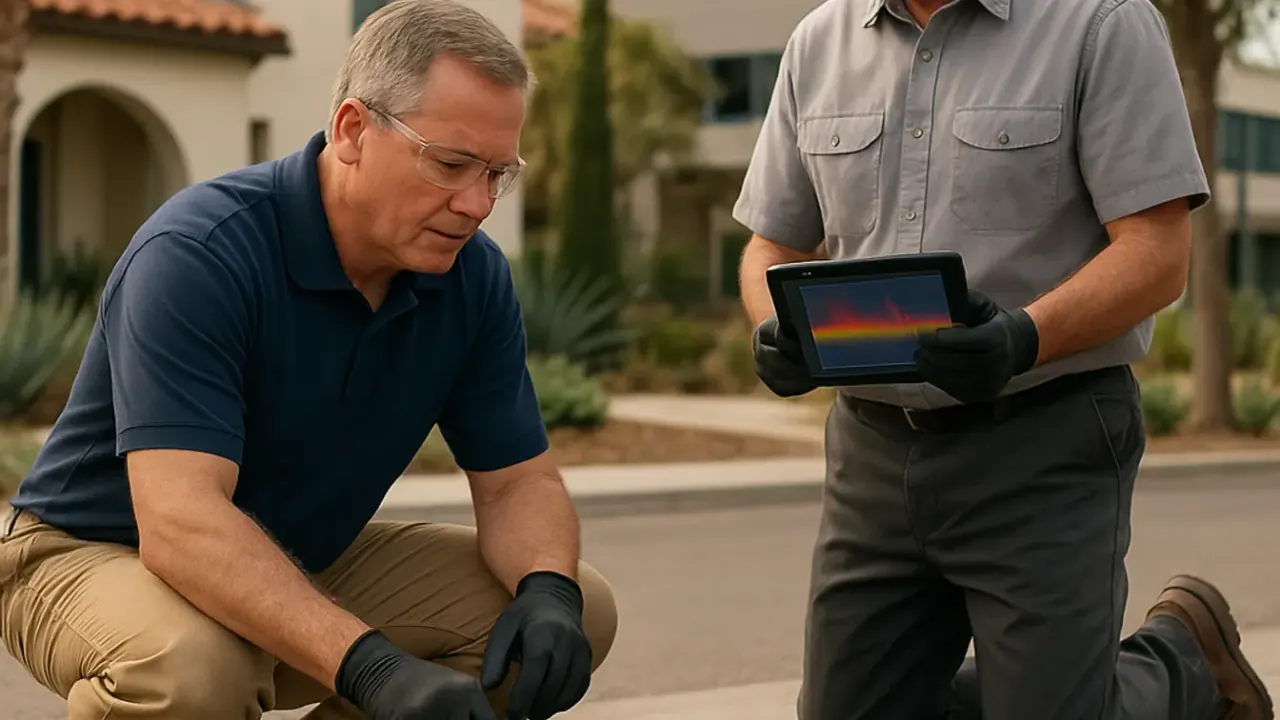
A leaking pool wastes thousands of gallons and undermines the deck, the shell, and your equipment. These are the outcomes our customers care about most.
Stop the water bill spike
A pinhole leak in a return line can waste 200 to 600 gallons a day. We locate it with a pipeline inspection camera and pressure testing gauge, then repair the section so your meter stops spinning. Most customers see their water bill drop back to normal within one billing cycle.
Protect the deck and shell
Water escaping under a pool deck softens the soil and causes concrete to settle or crack. We use a moisture meter and soil probe to map the saturation zone, then fix the source before the deck drops. Catching it early saves thousands in concrete work.
No unnecessary draining
You do not need to drain the pool for us to find the leak. Our acoustic listening disc and ultrasonic leak detector work through water and soil. We keep your pool filled, your pump running, and your family swimming while we diagnose the problem.
One crew, diagnosis to repair
We are a licensed California C-36 Plumbing Contractor, so we do not hand you a report and walk away. We locate the leak, cut and replace the failed section with PVC pipe or PEX tubing, and pressure-test the line before we leave. One call, one fix.
Google ★★★★★4.9
Planet Plumbing found a pool leak that two other companies missed. They used thermal imaging and an acoustic disc, showed me the spot, and repaired it the same day. The pool has held water for months. Fair price and no upsell.
Yelp ★★★★★4.8
Our HOA pool was losing water and the deck was sinking. Planet Plumbing mapped the leak with a moisture meter, repaired the line, and saved us thousands in deck work. They worked after hours so residents were not affected.
BBB ★★★★★4.9
I called about a pool losing water overnight. They ran a bucket test, pressure-tested the lines, and found a pinhole leak in the copper pipe. Rerouted it with PEX and pressure-tested before leaving. Professional and clean.
Google ★★★★★5.0
Same-day service in Santa Ana. The technician explained the bucket test, used an electronic leak detection wand, and found the crack at the skimmer. Sealed it and tested it. Honest pricing and a written warranty.
Our technicians have located and repaired pool leaks across Orange County for years, from 1960s plaster pools in Floral Park to newer pebble-tech builds in South Coast Metro. We hold a California C-36 Plumbing Contractor License and work to California Plumbing Code and Uniform Plumbing Code standards. We carry RIDGID pipeline inspection cameras, Fluke moisture meters, and Sewerin acoustic equipment on every truck. That means we diagnose the leak correctly the first time, not after three return visits.
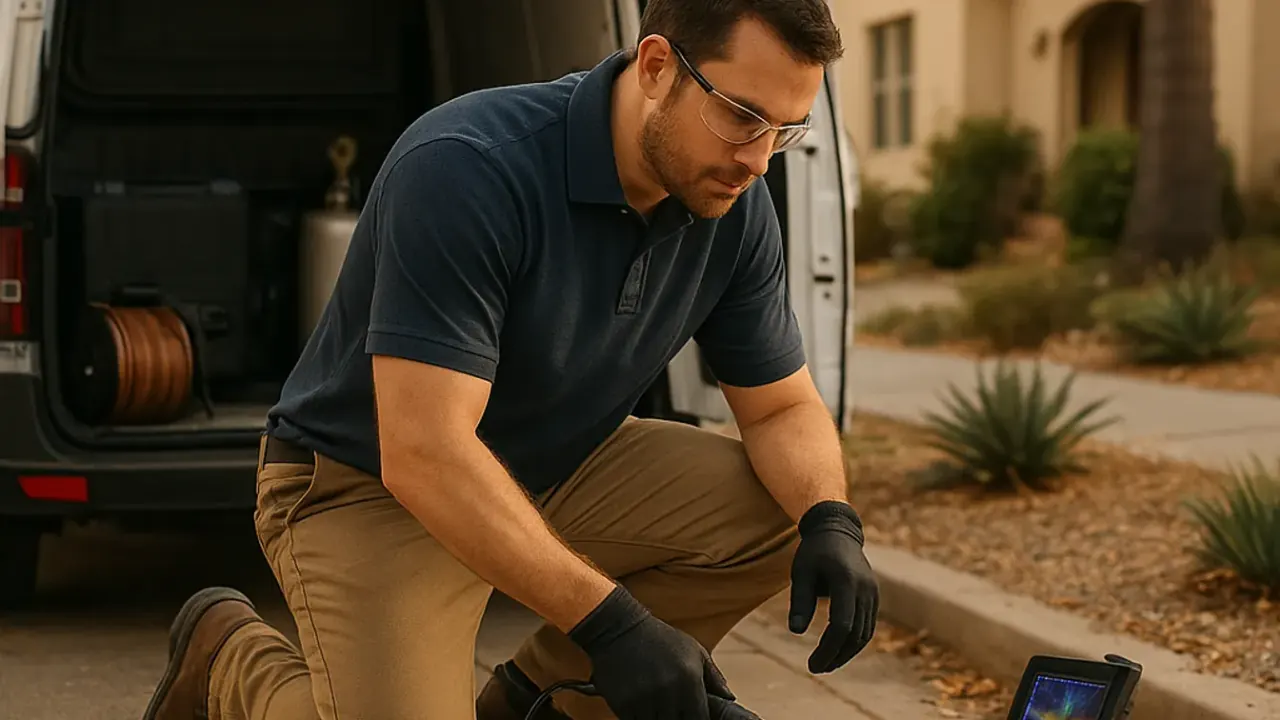
Real answers to the questions we hear most often from local homeowners and property managers.
Our core leak detection service covers the whole property, from the meter to the pool equipment pad. If your pool leak turns out to be a main line issue, we already have the tools on the truck to trace it.
View Leak DetectionPool leaks and household water leaks often show up together. We use the same acoustic and thermal tools to check irrigation drip tubing, hose bibs, and interior lines while we are on site.
View Water Leak DetectionA pool losing water can mask a slab leak under the house. We pressure-test both systems and use thermal imaging to tell the difference, so you fix the right problem the first time.
View Slab Leak DetectionWet spots near the pool sometimes trace back to a sewer line. We run a pipeline inspection camera to rule out root intrusion or a broken lateral before we open the pool deck.
View Sewer Line Leak DetectionPool heaters run on gas, and a leaking line near the equipment pad is a safety issue. We use a tracer gas detector and pressure testing gauge to confirm gas integrity while we service the pool plumbing.
View Gas Leak DetectionPool return lines run underground, often under decks and planters. We use pipe and line locators plus acoustic equipment to trace them without digging up the whole yard.
View Underground Leak DetectionCall us at 714-844-9877 or email [email protected]. We answer the phone 24/7 for emergencies and schedule same-day appointments for most leak detection calls in Santa Ana. Our office is at 1234 W 1st St, Santa Ana, CA 92703. We look forward to helping you.
Phone
7148449877Address
1240 S Wright St, Santa Ana, CA 92705
Hours
Mon–Fri: 7AM – 7PM
Sat: 8AM – 4PM
Sun: Emergency Only
24/7 Emergency Available