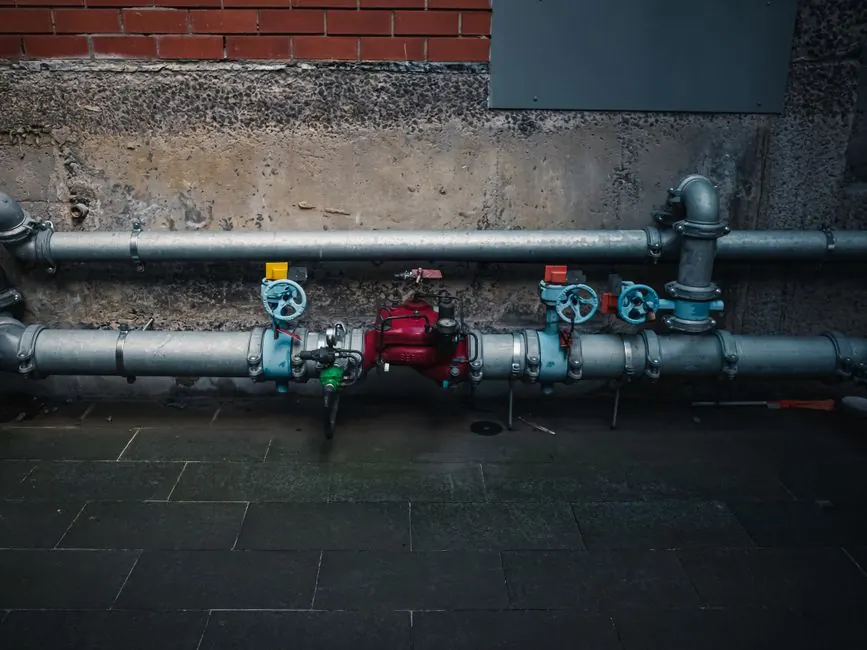
Santa Ana summer heat causes pipe leaks because the ground expands, water pressure spikes, and irrigation lines run nonstop. Preparing your pipes for Santa Ana summer heat means checking pressure, inspecting exposed lines, and testing irrigation before the first 100°F day hits. This guide covers why pipes fail in the heat, a month-by-month prep plan, and the warning signs that mean you need a pro.
Why Santa Ana Summer Heat Causes Pipe Leaks
Santa Ana summer heat causes pipe leaks through three mechanisms: thermal expansion, pressure surges, and soil movement. When the air hits 95°F to 105°F from June through September, the ground around your buried lines can reach 140°F. That heat pushes copper and PVC to expand. When the sun drops and the lines cool, they contract. Do that cycle 90 days in a row and joints that were already stressed start to weep.
Water pressure is the second factor. Santa Ana sits on a municipal system that pushes 60 to 80 PSI into most homes. On a 100°F afternoon, that pressure can spike 10 to 15 PSI higher because everyone is running sprinklers and topping off pools. A pinhole that held at 65 PSI in March can open up at 80 PSI in July. We see this every week across leak detection in Downtown Santa Ana, where 1920s bungalows still run original galvanized lines that were never sized for modern pressure.
The third factor is soil. Santa Ana's clay-heavy ground shrinks as it dries, then swells when you water the lawn. That movement shifts buried pipes. A slab leak that was a hairline crack in April becomes a visible wet spot on the floor by August. If you have ever wondered why do pipes leak in hot weather Santa Ana, the answer is almost always one of these three.
How Do I Prepare My Pipes for Santa Ana Summer?
Preparing your pipes for Santa Ana summer takes one weekend in April or May and costs under $100 in parts. Here is the sequence we walk homeowners through.
- Test your water pressure. Screw a $15 gauge onto an outdoor spigot and run it for 24 hours. Anything above 80 PSI needs a pressure-reducing valve. Anything below 40 PSI means you have a supply problem.
- Insulate exposed pipes. Attic and garage lines in Santa Ana can hit 130°F in July. Foam pipe sleeves cost about $2 per six feet and drop surface temperature 20°F to 30°F.
- Check the water heater. Flush the tank in spring. Sediment buildup plus 140°F incoming water is how tanks fail in August.
- Walk the irrigation. Turn on each zone for 5 minutes and look for soggy spots, geysers, or a meter that keeps spinning after the zone shuts off.
- Inspect the meter. With every fixture off, the leak dial should be still. If it moves, you have a leak somewhere between the meter and the house.
If any of those steps turn up a problem, our team handles leak detection Santa Ana CA with electronic and acoustic tools that find the source without tearing up your yard.
Pipe Expansion Leaks in Summer Santa Ana CA
Pipe expansion leaks in summer Santa Ana CA show up most often at joints, not in the middle of a straight run. Copper expands roughly 1 inch per 100 feet for every 100°F of temperature change. That does not sound like much until you realize the pipe is anchored at both ends. The stress goes straight into the nearest elbow, tee, or coupling.
We find three patterns over and over:
- Pinhole leaks in copper. A 1/16-inch pinhole can spray a gallon an hour into a wall cavity. By the time you see the stain, the drywall is already ruined.
- Failed CPVC glue joints. CPVC gets brittle after 15 to 20 years. Heat accelerates that. A joint that held fine at 70°F can pop at 110°F.
- Slab cracks. When the soil under a post-tension slab dries and shrinks, the slab moves. The pipe underneath does not.
If you are seeing warm spots on the floor or hearing water run when nothing is on, that is a classic slab leak detection Santa Ana CA situation. We use thermal imaging and acoustic listening to pinpoint the break within a few inches before we open anything up.
Summer Irrigation Leak Check Santa Ana California
A summer irrigation leak check Santa Ana California homeowners can do themselves takes 20 minutes and can save 200 gallons a day. Irrigation is the number one source of summer water waste in Santa Ana, and most of it is invisible. A broken sprinkler head buried under fescue can run for weeks before the lawn shows a dry patch.
Here is the test. Shut off every faucet, appliance, and hose bib inside the house. Then go watch your water meter for 10 minutes. If the low-flow indicator is spinning, water is moving somewhere. Now shut off the irrigation main valve and watch again. If the meter stops, the leak is in the irrigation system. If it keeps moving, the leak is inside the house.
For irrigation systems, we look at three things: the backflow preventer, the valve box, and the lateral lines. Valve boxes in Santa Ana often sit in full sun and crack after 8 to 10 years. Lateral lines get chewed by gophers and tree roots. If your water bill jumped 30% between May and July with no change in habits, book an irrigation leak detection Santa Ana CA visit before the next billing cycle.
Summer Leak Detection Tips Santa Ana California
Summer leak detection tips Santa Ana California residents can use right now, ranked by how much water they save you.
Watch the meter weekly. Read it every Sunday morning before anyone showers. A jump of more than 1,000 gallons week over week with no change in routine means a leak. That is roughly a 0.7 gallon-per-minute flow running 24/7.
Check the pool. A pool in Santa Ana loses 1/4 inch per day to evaporation in July. Anything more than that is a leak. Mark the water line with a piece of tape at the same time each morning for three days. If it drops more than 3/4 inch total, call us for pool leak detection Santa Ana CA before the pump runs dry.
Look at the water bill history. Pull the last 12 months online. Santa Ana bills in hundred cubic feet (CCF). A family of four uses 12 to 15 CCF per month in winter and 18 to 22 CCF in summer. If July shows 30 CCF, you have a leak.
Sniff the cabinets. A musty smell under the kitchen or bathroom sink is often a slow drain or supply leak that has been running for weeks. Dry the cabinet floor, put a paper towel down, and check it in 24 hours.
If you want a pro to run the full checklist, our residential leak detection Santa Ana CA service covers the whole house in about 90 minutes with no guesswork.
Common Mistakes to Avoid
The biggest mistake we see is waiting until August to think about summer plumbing leak prevention Santa Ana CA. By then the damage is already done. Here are the others.
- Turning up the pressure instead of fixing the leak. If your shower trickles, the problem is usually a clogged cartridge or a failing line, not low city pressure. Cranking the regulator to 90 PSI just accelerates the failure.
- Ignoring a 5% bill increase. A 5% jump is a warning. A 30% jump is a leak. Catch it at 5%.
- Patching a pinhole and calling it done. One pinhole in copper usually means the whole run is near end of life. We see this constantly in leak detection in Floral Park, where 1950s copper is now on its third or fourth pinhole.
- Watering at noon. Half the water evaporates before it hits the roots, and the wet-dry cycle stresses the soil around your pipes even more. Water before 8 a.m.
- Skipping the pool check. Pool leaks are the most expensive to ignore because the pump runs 8 hours a day pulling air.
When to Call a Professional
Call a professional when the meter moves with everything off, when you see water where it should not be, or when your bill jumps more than 10% month over month. Those three signals cover 90% of the leaks we find in Santa Ana homes.
Planet Plumbing handles leak detection and repair across Santa Ana. We find the leak with electronic and acoustic equipment, show you exactly where it is, fix it, and test the line before we leave. No digging up the yard to look around. No guesswork. One visit, one price, and a dry house when we are done.
If you are on a slab, we use thermal imaging. If it is underground, we use acoustic listening. If it is a pool, we pressure-test the lines. Whatever the source, we will tell you what it costs before we start.
Frequently Asked Questions
Can summer heat cause pipe leaks in Santa Ana CA?
Yes. Santa Ana summer heat pushes ground temperatures to 140°F, which expands copper and PVC and stresses joints. Combined with pressure spikes from irrigation and pool use, heat is a leading cause of summer leaks. Most failures show up between July and September.
How do I prepare my pipes for Santa Ana summer?
Test water pressure in April or May, insulate exposed attic and garage lines, flush the water heater, and run a full irrigation check. The whole job takes one weekend and costs under $100 in parts. Fix any pressure reading above 80 PSI before June.
Does heat increase water leaks in California?
Yes. Heat increases leaks in two ways: thermal expansion stresses pipe joints, and dry soil shifts buried lines. California's clay soils shrink 10% to 15% in summer, which is enough movement to crack a 40-year-old slab line. Water demand also spikes, raising system pressure.
When should I schedule leak detection before summer in Santa Ana?
Schedule it in March or April, before the first 90°F day. That gives you time to fix anything found before peak heat. If you miss that window, book as soon as your bill jumps or the meter starts moving with everything off.
How much does leak detection cost in Santa Ana?
Typical 2026 pricing in Santa Ana runs $250 to $450 for a standard residential leak detection visit, depending on whether it is a slab, underground, or pool leak. Repair is quoted separately once we know what we are fixing.
Get Help with Leak Detection in Santa Ana
If your meter is moving or your bill jumped, do not wait for the next heat wave. Call Planet Plumbing at 714-844-9877 and we will find the leak, fix it, and get your water bill back to normal.